
A car that won’t start may not need a trip to a repair shop. In some cases, car repair without towing is possible when the vehicle is safely parked and the problem can be handled on-site. Before arranging a tow, find out whether the symptoms are suitable for a mobile assessment. Not every repair can be completed where the car is parked.
A mobile mechanic can inspect a vehicle at your home or workplace and may be able to diagnose or repair some issues there. The right option depends on the symptoms, the vehicle’s condition, and the work and equipment required. Before booking, confirm that the mechanic covers your location and can assess the issue you describe.
This guide explains which problems may be practical to address on-site, when towing may be the safer choice, and what details to share when requesting service in Virginia, Washington, DC, or Maryland. It also covers how collision damage, a major mechanical problem, or an unsafe parking location can affect your next step.
Key Takeaways
- Car repair without towing may be an option when the vehicle is safely parked and the work can be done on-site.
- Diagnostics, routine maintenance, tune-ups, and some mechanical repairs may be possible, depending on the vehicle and fault.
- Prioritize safety: don’t drive a vehicle that may be unsafe, and consider towing when it needs shop-based work.
- Share the vehicle’s location, year and model, symptoms, warning lights, and whether it starts when requesting help.
- Before arranging a mobile mechanic visit in Virginia, Washington, DC, or Maryland, confirm service-area coverage and whether the repair appears suitable.
Car repair without towing: when on-site help may be an option
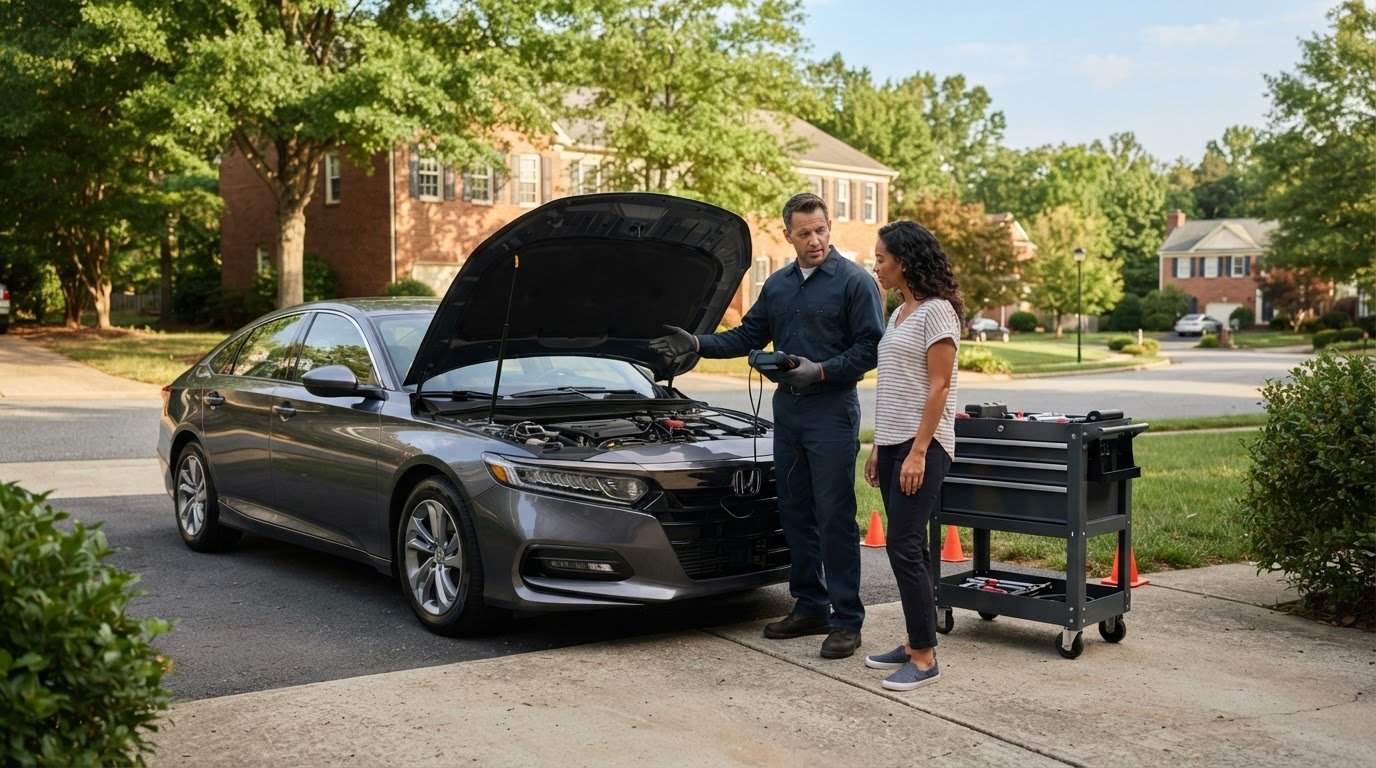
A mobile mechanic may diagnose or repair a vehicle where it’s parked. Car repair without towing can be practical when the problem is suitable for on-site work, the vehicle is in an appropriate condition, the mechanic can bring the needed tools, and there’s safe access to the car.
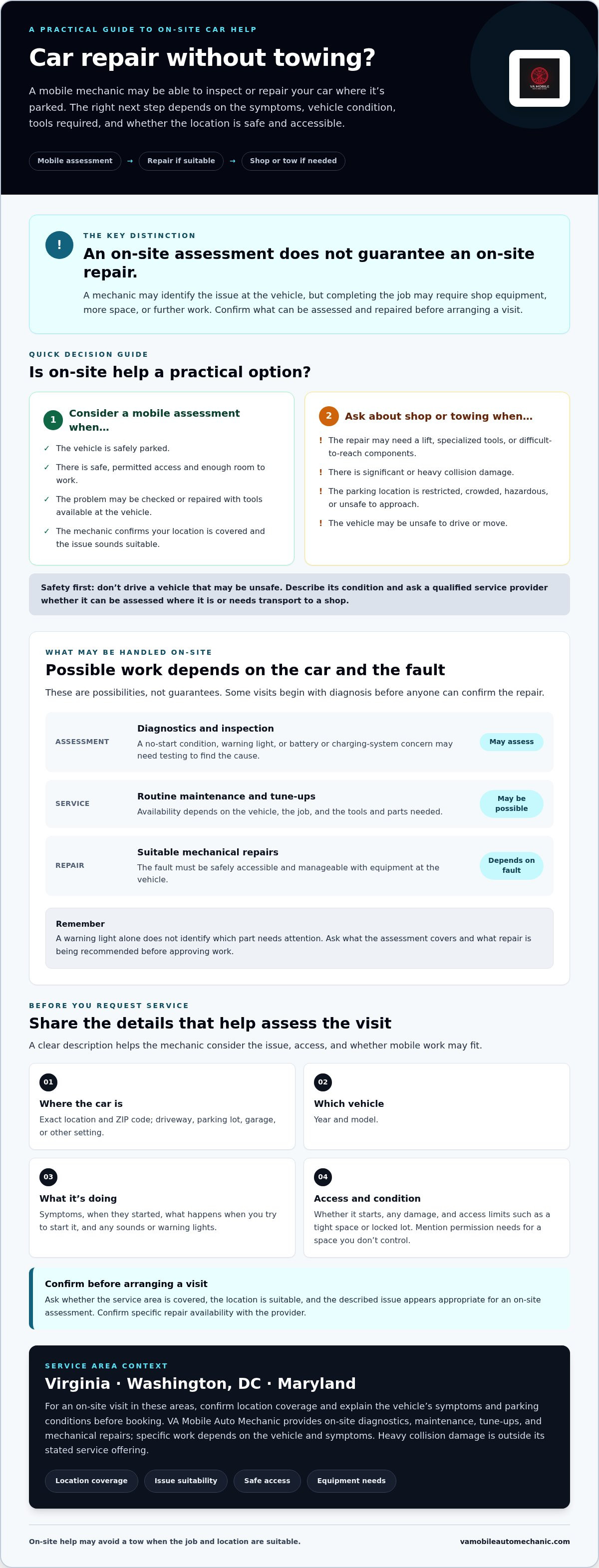
Car repair without towing is realistic when the vehicle can stay safely parked and the problem can be assessed or repaired with mobile tools at that location. An inspection may identify the issue, but it doesn’t guarantee the repair can be completed on-site. The job may require equipment, space, or further work available only at a repair shop.
What does car repair without towing mean?
Instead of driving to a shop, you arrange for a mobile mechanic to travel to the vehicle. Depending on the symptoms and vehicle, the visit may involve diagnostics, maintenance, or a mechanical repair. This differs from towing, which transports the vehicle, and collision repair, which may require specialized shop facilities. Roadside assistance describes a broader range of help provided away from a traditional garage, but what’s available depends on the provider and the vehicle’s needs.
Where can a mobile mechanic work on a parked car?
A home driveway or an accessible workplace parking space may be suitable if there’s enough room to reach the vehicle and work safely. Check for permission before booking if you don’t control the space. A crowded, restricted, or otherwise unsafe location can affect whether a visit is possible.
Share the vehicle’s exact location and ZIP code, then confirm that the area is covered and the site is suitable. Explain whether the vehicle is in a driveway, parking lot, garage, or another setting. Mention access limits, such as a tight parking space or locked lot, so the mechanic can assess whether an on-site visit is practical before traveling.
If the vehicle has significant damage or the suspected repair needs specialized shop equipment, such as a lift, mobile work may not be the right fit. Don’t try to move a vehicle that may be unsafe to drive. Describe what you’ve noticed and ask whether it can be assessed where it is or needs transport to a shop.
Which car problems can be repaired on-site?
A mobile mechanic may be able to diagnose a problem or complete a repair where the vehicle is parked. The available work depends on the symptoms, vehicle condition, parts and tools needed, and whether the mechanic can access the affected area. On-site repair is suitable when the fault can be safely assessed and addressed with equipment available at the vehicle.
Common issues a mobile mechanic may assess on-site
Some visits begin with diagnosis rather than a confirmed repair. A no-start condition, a warning light, or a concern with the battery or charging system can have different causes. A mechanic may need to inspect or test the vehicle before recommending what to do. A warning light alone doesn’t confirm which part needs attention.
Depending on the vehicle and job, on-site service may include diagnostics, routine maintenance, tune-ups, and suitable mechanical repairs. These are possibilities, not guarantees. When describing the issue, include when it started, what happens when you try to start the car, and any sounds or warning lights you’ve noticed. This helps the mechanic assess whether the problem may be checked at your location. Confirm specific repair availability with the provider before arranging a visit.
Before approving work, ask what the assessment covers and what repair is being recommended. The Federal Trade Commission’s guide to consumer rights for car repair offers practical information about discussing repairs and estimates with a provider.
When the repair may require a shop or towing
Some problems call for equipment or access that isn’t available at the vehicle. A repair may need a lift, specialized tools, or work on components that are difficult to reach on-site. In those cases, the mechanic may be able to assess the issue but not complete the repair there. Ask what equipment or next steps may be needed.
Heavy collision damage is outside VA Mobile Auto Mechanic’s stated service offering. A vehicle that’s badly damaged, unsafe to approach, or in a hazardous location may also need a different response. Don’t drive a car if its condition could make driving unsafe; ask a qualified service provider how to proceed. VA Mobile Auto Mechanic provides on-site diagnostics, maintenance, tune-ups, and mechanical repairs. Specific work depends on the vehicle and symptoms. Review mobile mechanic service information and ask whether your vehicle’s issue may be suitable for an on-site assessment.
Mobile mechanic or tow truck: how to choose the safer next step
The choice isn’t simply between a mobile mechanic and a tow. First consider whether the vehicle is in a safe place and whether it may be driven without risk. Car repair without towing may be possible when the vehicle is parked and accessible, but a mobile mechanic can’t complete every repair at every location. The fault, required equipment, and vehicle condition all affect the next step.
| Situation | Possible next step | What to consider |
|---|---|---|
| Vehicle is safely parked and accessible | Ask about a mobile assessment | Share the symptoms and location. The provider must confirm whether the job can be done on-site. |
| Cause of the problem is unclear | Ask whether a mobile mechanic can assess it | Diagnosis may help identify the likely issue, but doesn’t guarantee the repair can be completed there. |
| Vehicle may be unsafe to drive, has collision damage, or needs shop-based work | Contact a roadside provider about transport to a repair shop | Some conditions call for specialized equipment or work beyond mobile service. |
Signs that an on-site assessment may be reasonable
A vehicle stopped in a driveway or accessible parking space may be suitable for a mobile assessment if there’s safe access and enough room to work. Describe what happened, what the vehicle is doing, and any warning lights or unusual sounds. Avoid guessing at the cause. The service provider needs to confirm whether the vehicle and repair are suitable for on-site work.
Situations where towing may still be the right choice
Don’t drive if you think the vehicle may be unsafe. Collision damage, a vehicle obstructing traffic, or a fault that needs shop equipment may make a mobile visit unsuitable. A mechanic may be able to assess the situation, but the repair could require a shop. Confirm the next step with a qualified professional or roadside provider.
If the vehicle creates an immediate hazard, follow local emergency guidance and contact roadside assistance. Don’t put yourself or others at risk to avoid a tow. A safe location and the appropriate service matter more than keeping the vehicle where it is.
Car repair without towing: details to share first
Clear information helps a mobile mechanic assess whether an on-site visit may be suitable. It won’t confirm the cause or guarantee that the repair can be completed there, but it helps the provider understand what you’re seeing and what to check before arranging service.
What information helps assess an on-site repair request?
Before contacting a provider, gather these details in order:
- Location: Share the address or location where the vehicle is parked.
- Vehicle details: Provide the make, model, and year.
- Symptoms: Explain what happened and what the vehicle does now. Mention relevant recent events, such as a long period without use or a change in how it runs.
- Warning lights: Describe any dashboard lights you noticed, including when they appeared.
- Starting and movement: Say whether the vehicle starts or moves. Don’t try to drive it just to test this if you’re concerned it may be unsafe.
Be specific about unusual sounds or visible issues, such as smoke or a fluid leak, without trying risky tests or reaching under the vehicle. Photos of a dashboard warning or visible damage can help, but only take them if you can do so safely. Don’t enter traffic or move an unsafe vehicle to get a better view.
Check access and local service coverage
Explain whether the vehicle is at a home, workplace, or another location, and mention any access limits. A locked lot, restricted parking area, or tight space may affect whether a mechanic can reach the vehicle safely. If you don’t control the property, check that you have permission for service to take place there.
Before scheduling, ask whether your ZIP code in Virginia, Washington, DC, or Maryland is within the current service area. Describe the symptoms and ask whether the vehicle’s condition and likely work may be suitable for an on-site assessment. This helps set expectations without assuming a particular repair is available.
Once you have these details, you can ask whether on-site service is available for your vehicle. Share what you know and let the provider confirm the next step.
Get on-site car repair in Virginia, Washington, DC, or Maryland
To decide whether car repair without towing is practical, start with the symptoms, consider whether the vehicle and location are safe, then confirm whether the work may be handled on-site. A mobile visit can help you assess the problem before arranging transport, but it isn’t the right fit for every vehicle or repair.
VA Mobile Auto Mechanic provides on-site diagnostics, maintenance, tune-ups, and mechanical repairs at customers’ homes or workplaces in Virginia, Washington, DC, and Maryland. Coverage can vary by location, so confirm your city or ZIP code and describe the vehicle’s condition before scheduling. The company does not provide towing or in-shop heavy collision repair.
What to expect from an on-site mechanic visit
A mechanic travels to the parked vehicle to assess the issue you reported. Your initial description helps guide the visit, but the findings may change what work is appropriate. The repair plan depends on the inspection, as well as the parts, tools, equipment, and safe working space required.
An assessment may identify a problem that can be addressed on-site, or show that the vehicle needs shop-based work. Ask what the mechanic found, what work is recommended, and whether it can be completed at the vehicle’s location. Specific repair availability can only be confirmed after the vehicle and job details are reviewed.
Request service with the right details
When you contact a provider, share the vehicle’s make, model, and year, along with its symptoms, warning lights, and whether it starts. Include the exact location and your city or ZIP code. Mention access limits at the property, such as restricted parking or a location where it may be difficult to work safely.
If the vehicle may be unsafe to drive or needs work that can only be done at a shop, don’t attempt to drive it there. Arrange towing separately and let the provider know the vehicle’s condition. VA Mobile Auto Mechanic does not offer towing, so transport must be arranged with a separate provider when needed.
Share the details you have and ask whether the location and reported issue may be suitable for an on-site assessment. To discuss the vehicle and location, contact VA Mobile Auto Mechanic about on-site repair.
Choose the right next step for your vehicle
Car repair without towing may be an option when your vehicle is safely parked and the issue can be handled with mobile tools. A mobile mechanic can assess symptoms, but the repair plan depends on what they find, the equipment needed, and the conditions at the vehicle’s location. If the car may be unsafe to drive or needs shop-based work, prioritize safety and arrange transport separately.
Before requesting help, share the vehicle’s year and model, its location, whether it starts, and the symptoms or warning lights you’ve noticed. These details help the provider assess whether an on-site visit may be suitable, though they can’t guarantee a specific repair.
VA Mobile Auto Mechanic travels to vehicles at customer locations in Virginia, Washington, DC, and Maryland, offering on-site diagnostics, maintenance, and mechanical repairs. Confirm service-area coverage and repair suitability before arranging a visit. To discuss your vehicle and location, contact VA Mobile Auto Mechanic to ask about on-site service. With clear details and a safety-first plan, you can make an informed decision about what comes next.
Frequently Asked Questions
Can a mobile mechanic repair my car without towing it?
Yes, a mobile mechanic may diagnose or repair your car where it’s parked if the fault, vehicle condition, tools required, and access make on-site work suitable. Car repair without towing can be practical for some diagnostics, maintenance, and mechanical repairs. A visit doesn’t guarantee the repair can be completed there, so describe the symptoms and confirm the job with the provider first.
What car repairs can a mobile mechanic do at my home?
A mobile mechanic may perform diagnostics, tune-ups, routine maintenance, and suitable mechanical repairs at your home. The exact work depends on the vehicle and problem. For example, a warning light or starting concern may need assessment before anyone can confirm the repair. Ask the provider whether your vehicle’s symptoms and the work required can be handled at your location before arranging a visit.
When does a car need to be towed to a repair shop?
A car may need transport if it’s unsafe to drive, has significant collision damage, or requires shop equipment or work that can’t be done on-site. A vehicle obstructing traffic or stopped in a hazardous location also needs a safety-first response. Don’t drive if you’re concerned the car may be unsafe. Contact a qualified professional or roadside provider to discuss the appropriate next step.
Can a mobile mechanic diagnose a car that will not start?
A mobile mechanic may be able to assess a car that won’t start at its parked location. The cause isn’t always clear from the symptom alone, so the mechanic may need to inspect or test the vehicle before recommending work. Share what happens when you try to start it, any warning lights, and when the problem began. Confirm whether an on-site diagnostic visit is suitable for your vehicle.
Is it safe to drive my car to a mechanic if a warning light is on?
It depends on the warning and how the car is behaving, so don’t assume it’s safe to drive. Check the vehicle manual for guidance about the specific light. If the car shows unusual behavior, makes concerning sounds, or you’re unsure it can be driven safely, stop in a safe place and ask a qualified professional or roadside provider what to do. Don’t risk driving to a shop for an assessment.
Does VA Mobile Auto Mechanic provide towing in Virginia, Washington, DC, or Maryland?
No. VA Mobile Auto Mechanic provides mobile mechanic services, including on-site diagnostics, maintenance, and mechanical repairs, but does not provide towing in Virginia, Washington, DC, or Maryland. If your vehicle is unsafe to drive or needs shop-based work, arrange transportation through a separate provider. Share the vehicle’s location and symptoms with the mechanic to ask whether an on-site assessment may still be appropriate.
How do I know if a mobile mechanic serves my location?
Contact the provider with your city or ZIP code and the vehicle’s exact location, such as a home driveway or workplace parking area. VA Mobile Auto Mechanic serves customers in Virginia, Washington, DC, and Maryland, but confirm current coverage for your specific location before scheduling. Also describe the vehicle’s make, model, year, and symptoms so the provider can assess whether the requested on-site service may be suitable.