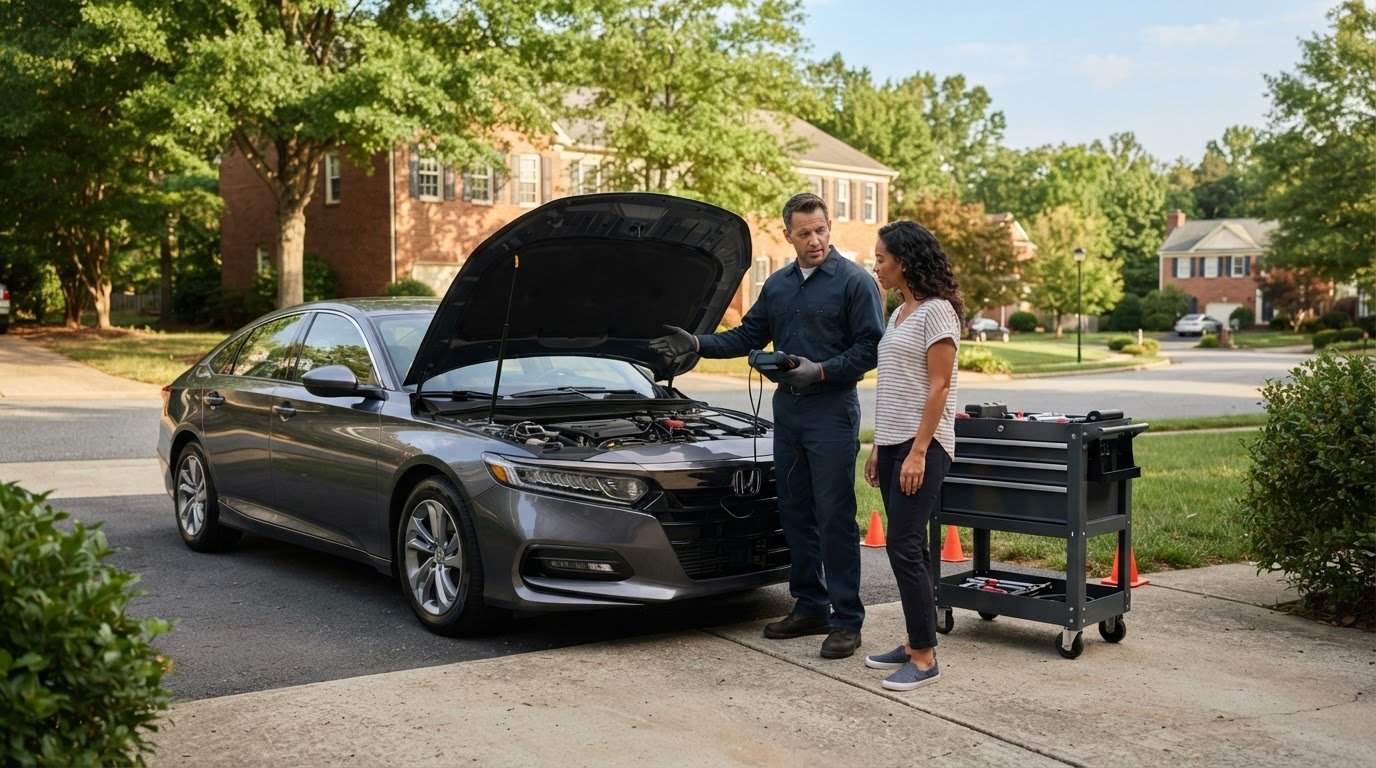

What if a mechanic comes to your house, checks the problem, and finds the repair isn’t suitable for the driveway? A home visit can make eligible repairs more convenient, but the issue, vehicle, and work area all affect what can be done on-site. Knowing what to expect helps you avoid surprises and choose the right appointment.
It’s reasonable to want clear answers before you book: what the mechanic will inspect, whether your parking spot is suitable, and what details to share. This guide explains how a mobile mechanic visit typically works, which jobs may be possible at home, and how to prepare your vehicle and work area.
You’ll also learn what information to provide, such as your car’s year, make, model, and a description of the issue. Routine maintenance, diagnostics, and some mechanical repairs may be handled on-site, depending on the vehicle and the work required. Confirm the repair’s suitability and service coverage for your address before scheduling, so you can decide whether a home appointment fits your needs.
Key Takeaways
- A mechanic comes to your house to assess the reported issue and determine whether the work suits the vehicle’s location.
- Sharing your vehicle’s year, make, model, and symptoms helps the mechanic prepare for the visit.
- Routine maintenance, diagnostics, and some mechanical repairs may be possible on-site, depending on the job and working conditions.
- Prepare a safe, accessible parking area and keep your keys and relevant service history handy.
- Before booking, confirm service coverage for your address in Virginia, Washington, DC, or Maryland, and discuss whether the repair may be suitable.
What does it mean when a mechanic comes to your house?
A mobile mechanic visit is an appointment where a mechanic performs diagnostics, maintenance, or mechanical repairs at the place where your vehicle is parked. Instead of driving to a repair shop, you arrange for the mechanic to come to the vehicle. The Automobile repair shop overview describes mobile mechanics as part of the broader auto repair industry, but the work they can do depends on the repair and the conditions at the location.
A home visit can be convenient, but it doesn’t mean every problem can be fixed in a driveway. Suitability depends on the reported issue, your vehicle, the service location, and whether the area is safe and practical for the work. The mechanic can assess the concern on-site and explain whether a mobile repair appears appropriate or another setting may be needed.
What happens during a typical home mechanic visit?
The mechanic first confirms which vehicle is being assessed and reviews the concern you reported. They may ask when the problem started, what symptoms you’ve noticed, and whether anything changes the way the vehicle runs. This information helps connect your description with what they find during an initial inspection or diagnostic checks.
After the assessment, the mechanic can explain the likely next step and whether the repair seems suitable for the vehicle’s location. The issue may need more investigation, or the work may call for tools, equipment, or conditions that aren’t available on-site. An assessment helps clarify the options before repair work proceeds.
How is a mobile mechanic different from a repair shop?
The main difference is where the initial service takes place. A mobile mechanic travels to the parked vehicle, such as at a home or workplace. That can save you a trip to a shop when the reported issue is suitable for on-site diagnostics, maintenance, or mechanical repair.
Mobile mechanical service isn’t towing, and it isn’t in-shop heavy collision repair. A traditional repair shop may be better suited to work that needs a vehicle lift, specialized equipment, or a dedicated repair facility. Some complex repairs may not be practical at home, so don’t assume a mobile appointment replaces a shop visit for every issue.
Before booking, describe the symptoms and share your vehicle’s details and location. Then confirm whether service is available at your address and whether the reported work may be performed where the vehicle is parked. This gives the mechanic a clearer picture and helps you decide if a home visit is a sensible first step.
How a Home Mechanic Visit Works: Booking to Follow-up
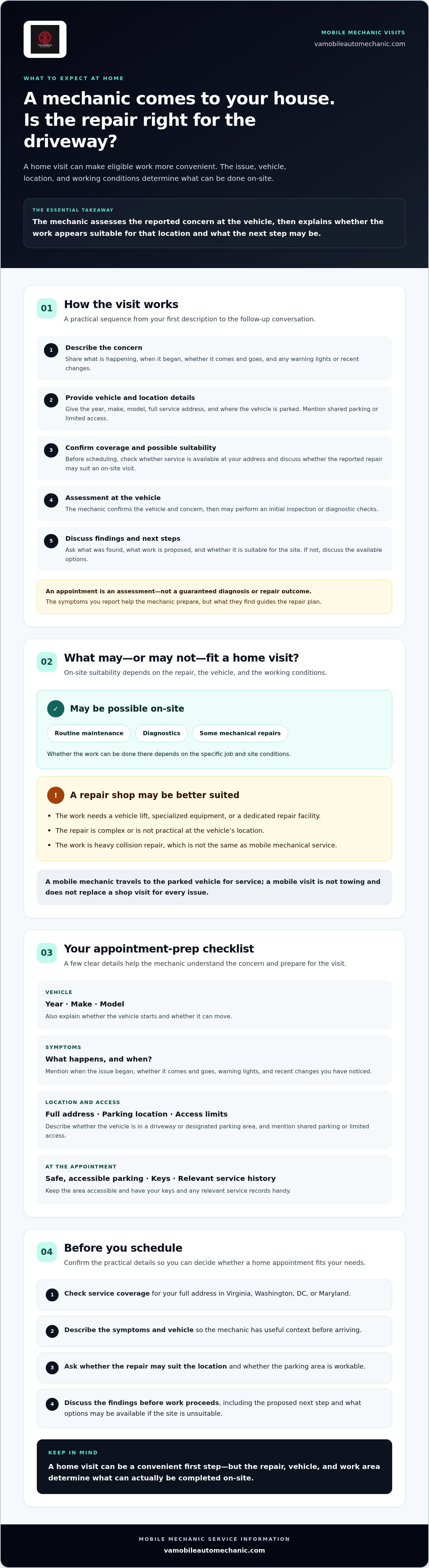
A home visit usually follows a few clear steps: describe the concern, share the vehicle details and location, schedule an appointment, have the mechanic assess the issue, then discuss the findings and next steps. If a mechanic comes to your house, the information you provide beforehand helps them prepare, but it can’t confirm a diagnosis or repair outcome before the vehicle is assessed.
What information should you share when scheduling?
Give the mechanic the vehicle’s year, make, and model, along with a plain description of what’s happening. Mention when the symptoms began, whether they come and go, and any warning lights or recent changes you’ve noticed. Also say whether the vehicle starts and whether it can move. These details help the mechanic understand the concern before arriving.
Confirm the full service address and explain where the vehicle is parked, such as in a driveway or designated parking area. If access is limited or the vehicle is in a shared lot, mention that when scheduling. Before setting an appointment, ask whether service is available at your address and whether the reported issue may be suitable for on-site work.
What happens after the mechanic arrives?
The mechanic will typically confirm the vehicle and concern with you, then begin an assessment based on the symptoms you described. This may involve an initial inspection or diagnostic checks. What they find guides the repair plan; the reported symptoms alone don’t guarantee a particular diagnosis or that the repair can be completed at the location.
Before work proceeds, ask the mechanic to explain the findings, the proposed next step, and whether the work is suitable for the site. If the vehicle needs work that can’t be done there, discuss what options are available. The Federal Trade Commission offers practical guidance on consumer rights for auto repair, including questions to consider when arranging repair work.
Clear communication helps keep the appointment focused. Keep any relevant service records nearby, and be ready to clarify when the issue occurs or what you’ve already noticed. To discuss a mobile mechanic visit, you can contact VA Mobile Auto Mechanic and share your vehicle details, concern, and location.
Which repairs suit a home visit, and when might a shop be needed?
A mobile mechanic may be able to perform diagnostics, routine maintenance, or some mechanical repairs where the vehicle is parked. But there’s no guarantee that every repair can be completed at home. The right setting depends on the vehicle, the problem, the tools and equipment required, and whether the parking area provides safe, workable conditions.
What can a mobile mechanic assess or repair on-site?
A mechanic can assess a reported concern and carry out diagnostic checks to help identify what may be causing it. Routine maintenance and some mechanical repairs may also be suitable for an on-site visit. For example, an inspection may show that a concern can be addressed at the vehicle’s location, or that more work or a different setting is needed.
The initial assessment matters because a symptom doesn’t always point to a single cause. A warning light, for instance, may require diagnostic checks before anyone can determine the next step. Share the vehicle details and symptoms when you book, then confirm whether the specific job may be suitable for a mobile visit. VA Mobile Auto Mechanic provides on-site diagnostics, maintenance, and mechanical repairs, with suitability assessed for the reported issue.
When may a home visit not be enough?
Some repairs call for equipment, facilities, or working conditions that aren’t available where the vehicle is parked. If the mechanic finds that the job isn’t suitable for on-site work, ask them to explain why and what kind of repair setting may be needed. A mobile visit can help assess the concern, but it doesn’t replace a repair shop for every job.
Heavy collision repair is not among this business’s services, and it doesn’t provide towing. If the vehicle has collision damage or can’t be moved, discuss the reported situation before booking and make separate arrangements as needed. Don’t assume an on-site mechanic can transport the vehicle or complete work outside the service offered.
VA Mobile Auto Mechanic describes its mechanics as experienced and certified. If you’re comparing providers, you can ask what their credentials cover; ASE Certified professionals are part of a certification program run by the National Institute for Automotive Service Excellence. Most importantly, explain the issue and confirm both address coverage and repair suitability before scheduling. If a mechanic comes to your house, the assessment helps determine whether the work can reasonably proceed there.
Preparing Your Driveway and Vehicle for a Home Mechanic
A little preparation can make it easier for the mechanic to access the vehicle and understand the concern. Before the appointment, check that the parking spot is available and tell the provider about anything that could limit access, such as a narrow space, a shared lot, or parking restrictions. Confirm whether the planned location is suitable for the work, since requirements can vary by repair.
What should you do before the mechanic arrives?
Use this short checklist to get ready:
- Make the vehicle accessible. Leave a clear path to it and arrange the keys or other access as agreed with the provider.
- Gather useful details. Have the vehicle’s year, make, and model ready, along with any relevant service records.
- Describe the symptoms. Note when the issue occurs, what you’ve observed, and whether warning lights appeared or anything changed recently.
- Clear the area being assessed. Where practical, remove personal items that could prevent access to the part of the vehicle related to the concern.
Specific setup needs can depend on the job. Ask the provider in advance whether anything else is needed at your location rather than assuming a particular driveway or work area will be suitable.
What if your vehicle is parked on a street or shared property?
Tell the provider where the vehicle is parked and describe any access limits before scheduling. For example, mention if the car is in a shared garage, on a busy street, or in a space where another vehicle may block access. These details help the provider consider whether the location can accommodate the planned assessment or repair.
Check any parking or property requirements that apply to your situation, including rules set by a building manager or property owner. Requirements can differ by location, so don’t rely on assumptions. Confirm with the provider that the specific parking arrangement is suitable for the requested work.
If a mechanic comes to your house, keep your phone available in case the provider needs clarification about finding the vehicle or reaching the parking area. Clear access and a straightforward description of the problem help the visit start smoothly, though they don’t guarantee that every repair can be completed on-site.
Before your appointment, contact VA Mobile Auto Mechanic to discuss the vehicle issue, access arrangements, and whether the location may suit the requested work.
Booking a mechanic who comes to your house in Virginia, DC, or Maryland
Before booking, confirm that service is available for your specific address. VA Mobile Auto Mechanic provides on-site diagnostics, maintenance, and mechanical repairs in Virginia, Washington, DC, and Maryland, but coverage should be checked for your location. Share where the vehicle is parked and describe the problem so the provider can discuss whether an on-site appointment may fit.
What to confirm before scheduling mobile auto repair
Give the provider the service address, vehicle details, and a clear account of the symptoms. Then confirm these points before setting an appointment:
- Address and availability: Ask whether the provider can schedule service at your specific address.
- Repair suitability: Explain the issue and parking setup, then ask whether the vehicle and location appear suitable for an on-site assessment or repair.
- Next steps: Ask what to expect if the assessment shows that the work needs to be done elsewhere.
A mechanic’s initial assessment can help clarify the appropriate repair setting, but the outcome can’t be confirmed before the vehicle is checked. If the reported issue isn’t suitable for on-site work, ask the provider to explain the reason and the next step. This helps you plan without assuming every repair can be completed where the car is parked.
What to expect from VA Mobile Auto Mechanic
VA Mobile Auto Mechanic offers diagnostics, maintenance, and mechanical repairs at customer homes or workplaces in Virginia, Washington, DC, and Maryland. Share your address and the vehicle concern when you reach out. The team can confirm current coverage for your location and discuss whether the reported work may be suitable for a mobile visit.
If a mechanic comes to your house, clear details about the issue and location help set practical expectations before the appointment. For an on-site appointment, ask about an at-home mechanic visit.
Make Your Next Repair Appointment Clearer
A home mechanic visit can save a trip to a repair shop when the reported issue is suitable for work at the vehicle’s location. Before booking, share the vehicle details and symptoms, confirm your parking setup, and ask whether the repair may be handled on-site. An assessment can clarify the next step, but not every job can be completed at home.
VA Mobile Auto Mechanic provides on-site diagnostics, maintenance, and mechanical repairs in Virginia, Washington, DC, and Maryland. The business describes its mobile mechanics as experienced and certified. Confirm that your address is covered and discuss your specific vehicle concern before scheduling.
If a mechanic comes to your house, a little preparation and clear communication can help you understand what to expect. Ask VA Mobile Auto Mechanic about an on-site visit to discuss your location and repair needs. With those details in hand, you can make a more informed choice about your next step.
Frequently Asked Questions
Can a mechanic come to my house to diagnose a car problem?
Yes, a mobile mechanic can assess a reported car problem where the vehicle is parked, depending on the issue and location. VA Mobile Auto Mechanic provides on-site diagnostics in Virginia, Washington, DC, and Maryland. Share the symptoms and your address before scheduling, then confirm whether service is available there and whether the vehicle’s parking spot suits an assessment.
What repairs can a mechanic do at my house?
A mobile mechanic may be able to perform routine maintenance and some mechanical repairs at your home, as well as diagnostic checks. The available work depends on the vehicle, repair, tools, and working conditions. Don’t assume a particular repair can be completed on-site. Describe the issue when booking and ask the provider to confirm whether it may suit a home visit.
Do I need to be home when a mobile mechanic arrives?
Whether you need to be present depends on the provider’s arrangements and how they’ll access the vehicle. Ask before scheduling if you can’t be there, and confirm how to provide the keys, explain the concern, and receive an update about the assessment. Don’t assume a vehicle can be inspected or worked on without your presence or an agreed access plan.
Is it safe to have a mechanic work on my car in the driveway?
A driveway may be suitable for some work, but the provider needs to consider the space, vehicle, repair, and working conditions. Tell them about slopes, tight parking, shared access, or other limits before booking. Ask whether the planned spot is appropriate for the requested assessment or repair. Also check any property or parking requirements that apply to your location.
What should I tell a mechanic before they come to my house?
Share the vehicle’s year, make, and model, then describe what you’ve noticed and when it happens. Mention warning lights, recent changes, and whether the vehicle starts or moves. Give the service address and explain the parking arrangement or access limits. These details help the mechanic prepare and discuss whether the issue may be suitable for on-site service.
Can a mobile mechanic fix a car that will not start?
A mobile mechanic may be able to assess a car that won’t start, but the cause and repair options can’t be confirmed in advance. Describe what happens when you try to start it, including any sounds or dashboard warning lights. Ask whether the issue may be assessed at your location. VA Mobile Auto Mechanic does not provide towing, so clarify arrangements if the vehicle needs to be moved.
What happens if the repair cannot be completed at my house?
The mechanic can explain what the assessment found and why the work may need a different repair setting. Ask what next steps they recommend and what arrangements you’ll need to make. VA Mobile Auto Mechanic provides on-site diagnostics, maintenance, and mechanical repairs, but not every repair is suitable for a home visit. The business does not provide towing, so vehicle transport must be arranged separately if needed.