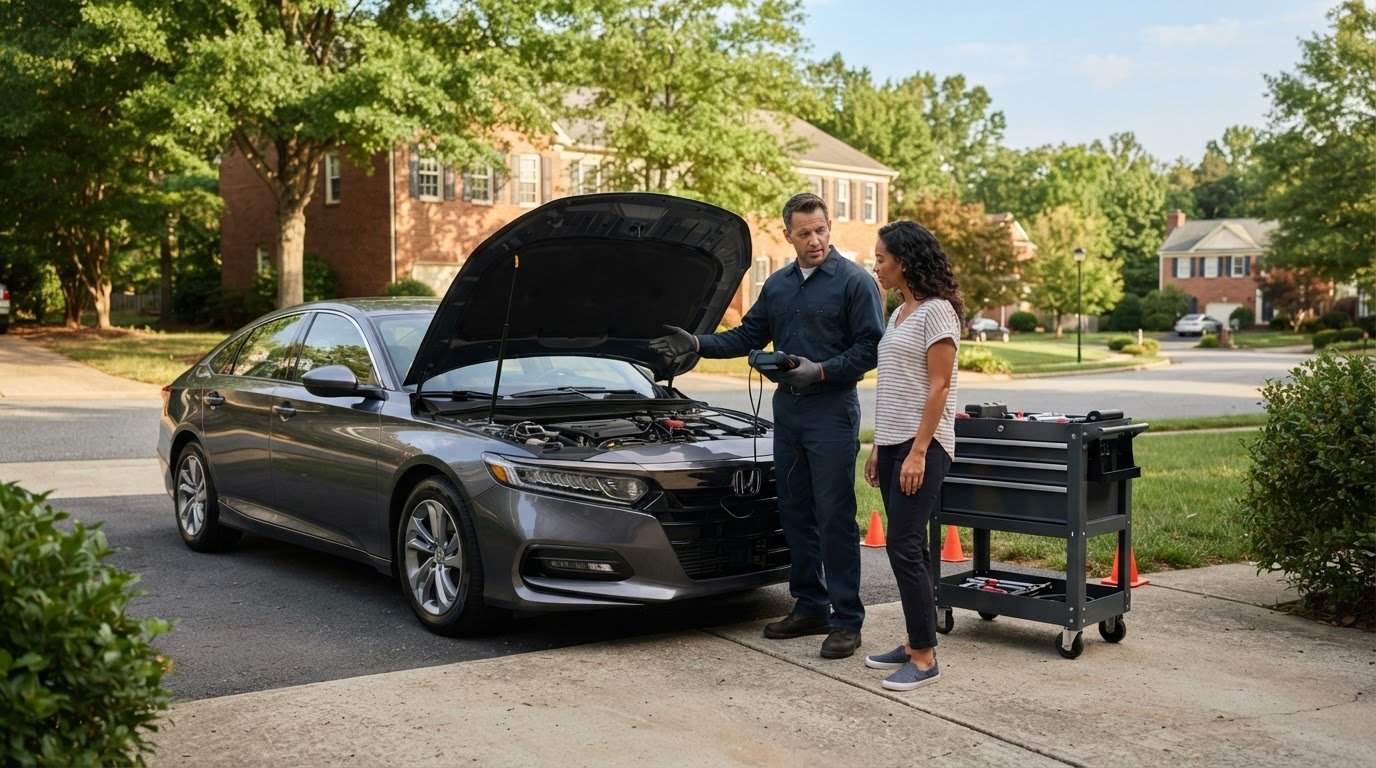

A grinding sound, a soft brake pedal, or a car that takes longer to stop can make even a short drive feel uncertain. Mobile brake repair brings an assessment to your home or workplace, so you can understand the concern and discuss whether the vehicle is safe to drive and what repair it may need.
An on-site visit can cover more than a quick check. A mobile mechanic can inspect the brake system and perform suitable repairs where the car is parked, including brake pad and rotor service. Some problems require specialized equipment or a different work setting. An inspection helps identify the issue and determine an appropriate next step.
This guide explains which symptoms call for prompt attention, what mobile brake repair can involve, and how diagnosis and repair typically work. You’ll also find practical steps for preparing a safe, accessible space around your vehicle. VA Mobile Auto Mechanic provides on-site mechanical diagnostics and repairs at homes and workplaces across Virginia, Washington, DC, and Maryland, helping reduce the need to drive to a shop for suitable brake work.
Key Takeaways
- Learn which brake symptoms deserve prompt assessment and when it may be safer not to drive.
- See how mobile brake repair can address suitable brake work at your parked vehicle.
- Understand how an on-site inspection helps identify visible brake concerns and guide next steps.
- Use a short checklist to prepare your vehicle’s location and share useful details about its symptoms.
- Know what to expect as the mechanic reviews findings and discusses the recommended repair.
What Mobile Brake Repair Covers and When Drivers Need It
Mobile brake repair is brake-system diagnosis and suitable repair performed where your vehicle is parked, so you can address a brake concern without first arranging a drive to a shop. A mechanic can discuss your symptoms, inspect accessible components, and explain the next step. For suitable work, such as brake pad and rotor service, the repair can be done at home or work.
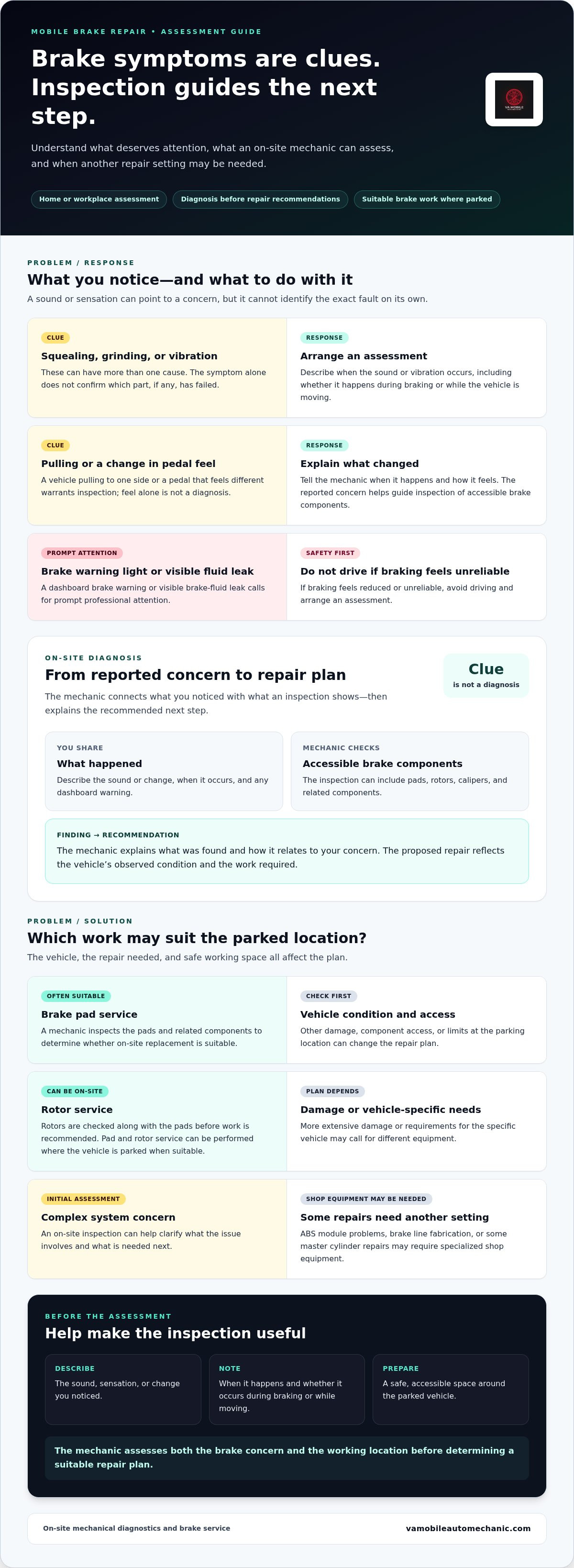
Brake symptoms are clues, not a diagnosis. Squealing can have more than one cause, and grinding, vibration, pulling to one side, or a change in pedal feel also warrant inspection. The sound or sensation alone cannot identify the exact fault. A brake warning light or visible brake-fluid leak calls for prompt professional attention. If braking feels reduced or unreliable, avoid driving and arrange an assessment.
Which brake symptoms should prompt an assessment?
Notice changes in sound, feel, or stopping behavior, especially if they persist or worsen. When describing the symptom, say when it occurs and whether it happens during braking or while the vehicle is moving. Don’t ignore a dashboard brake warning or fluid leak. For a fuller list of warning signs and what they can indicate, see our related article on brake warning signs.
Why consider an on-site brake mechanic?
A home or workplace appointment lets a mechanic assess the vehicle where it’s parked. This can make addressing a brake concern more convenient, particularly if you’re unsure whether the car is suitable to drive or have difficulty fitting a garage visit into your day. The mechanic evaluates the issue before recommending work, rather than treating a sound or warning as a diagnosis.
Brake systems use components such as pads and rotors, along with other parts that vary by vehicle, to slow the car. You can read more about how brake systems work for a basic overview. Whether a repair can be completed on site depends on the problem and whether there is enough safe working space. The mechanic assesses both the vehicle and the parking location before determining a suitable repair plan.
How a Mobile Mechanic Diagnoses Brake Problems On-Site
A useful diagnosis connects what you’ve noticed with what the mechanic can inspect. A reported brake symptom is a clue; a confirmed mechanical finding comes from inspecting the vehicle and identifying the cause. During mobile brake repair, the mechanic discusses your concerns, checks accessible brake components, explains the findings, and outlines the recommended next step.
What does a mobile brake inspection look at?
The mechanic starts by asking when the symptom occurs and how it feels or sounds. They then inspect accessible parts of the brake system, including pads, rotors, calipers, and related components. Your description helps guide the inspection, but a squeal, vibration, or change in pedal feel does not prove that a particular part has failed.
References such as the federal vehicle inspection standards provide context for brake-system checks. A repair recommendation should reflect the vehicle’s observed condition and the work required.
How does diagnosis guide the repair plan?
After the inspection, the mechanic explains what they found and how it relates to your concern. If the pads or rotors need service, the recommended work can focus on those parts. The mechanic discusses the proposed repair before proceeding, so you can understand why it’s recommended and what comes next.
The vehicle’s condition and access to its components can affect the plan. If the inspection reveals another concern, or the work requires equipment or access that isn’t suitable at the parked location, a different repair setting may be needed. The diagnosis helps clarify the next step instead of relying on symptoms alone.
To help the assessment, describe the sound or change you noticed, when it happens, and any dashboard warning. VA Mobile Auto Mechanic provides on-site diagnostics and brake service at homes and workplaces across Virginia, Washington, DC, and Maryland. Learn about an on-site brake assessment as a practical first step toward understanding the repair your vehicle needs.
Which Brake Repairs Suit Mobile Service, and When Is a Shop Better?
Mobile brake service can handle suitable repairs, but the right setting depends on the brake problem and the vehicle. Pad and rotor work can often be done at home or work. Before recommending an on-site repair, the mechanic assesses the vehicle, the condition of its brake components, and whether there is enough safe workspace.
Can brake pads and rotors be replaced at home?
Yes. Brake pad and rotor service can be performed as on-site mechanical work. The mechanic first inspects the relevant parts and vehicle condition, then recommends work based on the findings. The repair plan depends on the specific vehicle and inspection, so it’s best not to assume which parts need service before the assessment.
| Brake work or finding | On-site consideration | When another setting may be needed |
|---|---|---|
| Brake pad service | A mechanic inspects the pads and related components to determine whether replacement is suitable. | Other damage or access limits may affect the plan. |
| Rotor service | The rotors are checked along with the pads before a repair is recommended. | More extensive damage or vehicle-specific requirements may call for different equipment. |
| Complex system concern | An initial assessment can help clarify what the issue involves. | ABS module problems, brake line fabrication, or some master cylinder repairs may need specialized shop equipment. |
When might brake work need a shop setting?
A repair may need a shop if it requires equipment, access, or working conditions that aren’t available where the vehicle is parked. Serious damage or another issue found during inspection can also change the recommended next step. If the brakes feel unsafe, don’t drive the car to test them. The mechanic can explain the findings and why a different repair setting is needed.
For any setting, clear information about the work and the technician’s qualifications helps you understand the service. The National Institute for Automotive Service Excellence explains its role in automotive professional certification. VA Mobile Auto Mechanic’s certified mobile mechanics provide on-site brake pad and rotor service.
How to Prepare for Mobile Brake Repair at Home or Work
A little preparation helps the mechanic assess your vehicle and work safely at its location. Before arranging mobile brake repair, gather a few details about the car and its symptoms, then choose a parking spot with clear access around the vehicle. These steps can make an on-site appointment more straightforward at home or work.
What information should you have ready?
Share the vehicle’s make, model, and year when arranging service. Describe what you’ve noticed in plain terms, such as a squeal when braking, vibration through the steering wheel, pulling to one side, or a change in pedal feel. These details help explain the concern, but they don’t confirm its cause.
If possible, note when the symptom occurs. Does it happen during a slow stop, at higher speeds, or each time you press the pedal? Mention any recent brake work and dashboard warning lights you’ve seen. A clear description gives the mechanic useful context before inspecting the vehicle.
How can you prepare the parking location?
Choose a stable, accessible place where the car can remain parked while the mechanic works. Leave enough room around the wheels to reach the relevant components. Move nearby items and keep children and pets away from the work area. If the car is in a shared or tight space, choose a spot that allows safer, clearer access.
- Park on a stable surface and leave the vehicle accessible.
- Clear items from around the car, especially near the wheels.
- Keep children and pets away from the work area.
- At work, plan for parking rules, entry instructions, and any access arrangements.
For a workplace visit, let the mechanic know where the vehicle will be parked and how to reach it. Check whether your workplace requires visitor registration or restricts vehicle repairs in its parking area. At home, make sure gates or other access barriers won’t prevent the mechanic from reaching the vehicle.
VA Mobile Auto Mechanic provides on-site mechanical diagnostics and brake service at homes and workplaces across Virginia, Washington, DC, and Maryland. Preparing the vehicle details, symptom notes, and parking access can help the visit get off to a clear start. Arrange on-site brake repair and share these details when describing the concern.
What to Expect When You Schedule VA Mobile Auto Mechanic Brake Repair
Scheduling starts with a clear description of what your brakes are doing and where the vehicle will be parked. VA Mobile Auto Mechanic provides on-site diagnostics and repairs at homes and workplaces across Virginia, Washington, DC, and Maryland. Sharing the vehicle details and symptoms helps the mechanic understand your concern before arriving.
What happens during an on-site brake appointment?
The mechanic begins by discussing the symptoms with you. Mention when you notice them, such as a sound during braking or a change in how the pedal feels. The mechanic then inspects relevant, accessible brake components and considers those findings alongside your description. This assessment helps distinguish a reported concern from a fault identified through inspection.
After the inspection, the mechanic explains what they found and the recommended next step in clear terms. If the findings point to suitable brake work, such as pad or rotor service, that repair can be completed at the parked vehicle. If the assessment shows that the work needs a different setting, the mechanic can explain why. The repair plan depends on the vehicle’s condition and the issue found.
Before work proceeds, you’ll have an opportunity to understand the recommended repair and agree on how to move forward. The process is straightforward: describe the concern, review the inspection findings, then decide on the proposed work. You don’t need to identify the failed part yourself. Sharing what you’ve noticed gives the mechanic a useful starting point.
How do you take the next step?
When requesting service, provide the vehicle’s make, model, and year, along with a brief account of the brake symptoms. Include when they occur and any dashboard warning lights you’ve seen. Also share whether the vehicle will be at your home or workplace, along with useful details about reaching or accessing the parked car.
For drivers arranging mobile brake repair in Virginia, Washington, DC, or Maryland, this information helps set up an on-site assessment with fewer unknowns. The mechanic will explain the inspection findings and recommended work so you can make an informed decision. If you’re ready to describe your brake concern and request service, schedule mobile brake repair.
Take the Next Step Toward Clearer Brakes
Brake sounds, vibration, pulling, or a change in pedal feel are reasons to arrange an assessment, but they aren’t enough to identify the exact fault. With mobile brake repair, a mechanic can inspect the vehicle where it’s parked, explain the findings, and recommend suitable work. Pad and rotor service may be handled on site, depending on the vehicle, the issue, and the available workspace.
Before the visit, share your vehicle details and describe when the symptoms occur. Choose an accessible parking spot at home or work so the mechanic can assess the brakes safely. VA Mobile Auto Mechanic provides on-site diagnostics and repairs at homes and workplaces across Virginia, Washington, DC, and Maryland.
If your brakes feel unsafe, avoid driving and arrange an assessment. When you’re ready to discuss your vehicle’s symptoms and next steps, request mobile brake service.
Frequently Asked Questions
Can a mobile mechanic replace brake pads at my home?
Yes, a mobile mechanic can replace brake pads at your home when the vehicle and work area are suitable. The mechanic first assesses the car and relevant brake components to determine whether pad service fits the condition found. Share the make, model, year, and symptoms when arranging service. If the inspection points to another concern, the mechanic can explain what needs attention and recommend the next step.
Can mobile brake repair include rotor replacement?
Yes, mobile brake repair can include rotor service when the vehicle and parking location are suitable. The mechanic inspects the brake components before recommending work and explains the findings for your specific vehicle. A noise or vibration can help describe the concern, but it doesn’t confirm that the rotors need replacement. The inspection helps determine whether rotor service is appropriate or another issue needs further assessment.
Is it safe to drive when my brakes are grinding?
Grinding can signal a serious brake concern, so don’t treat it as an ordinary noise or keep driving to see if it goes away. If braking feels reduced, the pedal has changed, or the vehicle is difficult to control, stop driving and arrange a professional assessment. Describe the grinding and any other symptoms clearly. A mechanic can inspect the vehicle and explain the next step based on the findings.
How does mobile brake repair work?
Mobile brake repair starts with you describing the vehicle and the brake concern. A mechanic comes to the parked vehicle, discusses the symptoms, and inspects relevant components. They then explain what they found and recommend suitable work. If the repair is appropriate for the vehicle and location, it can be completed on site. The inspection and vehicle condition guide the plan, not the reported symptom alone.
Can a mobile mechanic diagnose a brake warning light?
A mobile mechanic can assess a brake warning light and inspect relevant components. The light is a reason to investigate, not a diagnosis by itself. Note when it appeared and whether you’ve noticed changes in braking, unusual sounds, or fluid beneath the vehicle. Share those details when arranging service. The mechanic uses the inspection findings to explain the recommended repair or whether the concern needs further assessment.
What should I do before a mobile brake repair appointment?
Have your vehicle’s make, model, and year ready, along with a clear description of what you’ve noticed while braking. Note when noises, vibration, or pedal changes occur, and mention any warning lights or recent brake work you know about. Park on a stable, accessible surface and clear space around the vehicle. At work, consider parking rules and access arrangements before the mechanic arrives.
Does mobile brake repair serve Virginia, Washington, DC, and Maryland?
Yes. VA Mobile Auto Mechanic provides on-site mechanical diagnostics and repairs across Virginia, Washington, DC, and Maryland, including brake pad and rotor service. When arranging service, share your location, vehicle details, and the symptoms you’ve noticed. The mechanic assesses the brake concern at the parked vehicle and explains the recommended work based on the inspection and vehicle condition.