

Could a car that won’t start have an alternator problem instead of a weak battery or faulty starter? These issues can cause similar symptoms, so replacing a part based on guesswork may not solve the problem. Mobile alternator repair brings diagnosis to the place your vehicle is parked, which is useful when it can’t be driven safely to a shop.
It’s reasonable to want to understand the fault before authorizing a repair. A mobile mechanic can assess the charging system on site and help distinguish an alternator issue from other possible causes. Once the diagnosis identifies the problem, the mechanic can explain the repair and complete suitable mechanical work at the vehicle’s location.
This article explains how alternator concerns are diagnosed, what on-site service involves, and when a repair at home or work makes sense. You’ll also learn which details to share when requesting service and how to choose a practical next step without relying on an unreliable vehicle. VA Mobile Auto Mechanic provides mobile diagnostics and mechanical repairs across Virginia, Washington, DC, and Maryland.
Key Takeaways
- Mobile alternator repair can include on-site diagnosis and a suitable charging-system repair, helping you understand the likely cause before approving work.
- An alternator helps keep the battery charged while the engine runs, but battery, wiring, or belt problems can also affect charging.
- Starting and charging symptoms offer clues, not a definite answer. Comparing them helps explain why testing matters before replacing parts.
- Share your vehicle details and symptoms, and prepare a safe, accessible place where the mechanic can inspect the car.
- VA Mobile Auto Mechanic provides on-site diagnostics and repairs in Virginia, Washington, DC, and Maryland.
Mobile alternator repair: what it fixes and when to call
Alternator repair involves diagnosing and fixing a fault in the vehicle’s alternator or related charging system. Mobile alternator repair brings that assessment to where the vehicle is parked, such as at home or work, and allows suitable repairs to be carried out on site. The goal is to identify the cause of a charging problem before deciding which part, if any, needs repair or replacement.
What does an alternator do in a vehicle?
The alternator supplies electrical power while the engine runs and helps maintain the battery’s charge. The battery provides power to start the vehicle and supports electrical systems when the engine is off. Once the engine is running, the alternator helps power lights, climate controls, and other electrical equipment. Together, these parts are part of the charging system. For a broader explanation of how the component works, see this Automotive Alternator Overview.
If the alternator or another part of the charging system isn’t working properly, the battery may lose charge and the vehicle may eventually have trouble starting. That doesn’t automatically mean the alternator itself has failed. Battery condition, electrical connections, wiring, and belt operation can also affect charging.
Which symptoms can point to an alternator problem?
Notice changes that happen while driving or when you try to start the vehicle. Common clues include:
- A battery or charging warning light on the dashboard
- Headlights or interior lights that dim, flicker, or change brightness
- A battery that repeatedly loses charge, even after it has been recharged
- Unusual sounds or other electrical problems that appear alongside charging symptoms
These are clues, not a diagnosis. A warning light can indicate a charging-system problem without identifying the failed part. Dim lights may have another electrical cause, and unusual sounds can come from parts unrelated to the alternator. Symptoms can also overlap with a weak battery or a starting-system fault.
Arrange a diagnosis if the battery keeps losing charge, the warning light appears, or electrical symptoms persist. A mobile mechanic can inspect the vehicle where it’s parked and assess the charging concern before recommending a repair. If the vehicle is unreliable, don’t assume that replacing the alternator will resolve the issue. Identifying the cause first can help avoid an unnecessary repair.
How mobile mechanics diagnose alternator and charging-system problems
Charging-system testing should come before parts replacement because similar symptoms can come from the battery, alternator, starter, belt, or wiring. A diagnostic-first approach helps identify the likely source of the problem instead of treating every no-start as an alternator failure.
What happens during an on-site charging-system diagnosis?
The mechanic starts by discussing what you’ve noticed, such as warning lights, dimming lights, starting trouble, or a battery that keeps losing charge. When the symptoms began and whether you’ve had recent repairs can also help guide the inspection.
Next, the mechanic checks relevant parts and connections, which may include the battery, alternator, wiring, and belt operation. Appropriate electrical tests help assess battery condition and charging output. The exact checks and readings depend on the vehicle, its design, and the symptoms, so one procedure or target value shouldn’t be treated as universal. Vehicle repair information and engineering guidance, such as resources from SAE International Automotive Standards, provide broader technical context.
After testing, the mechanic considers the results together rather than relying on a single reading. They explain what the checks indicate and discuss the next step before repair work proceeds. With mobile alternator repair, this process takes place where the vehicle is parked.
Why might the alternator not be the real problem?
A weak or worn battery may not hold enough charge, while a starter problem can prevent the engine from turning over even if the charging system is working. A loose or damaged belt may affect alternator operation. Corroded or loose wiring and connections can also interfere with electrical flow.
These faults can produce overlapping clues. For example, a discharged battery may result from a charging fault, but it may also be unable to hold charge on its own. A no-start points to a problem that needs attention, but it doesn’t identify the failed part. That’s why visual inspection and vehicle-appropriate testing matter before recommending a replacement.
If your vehicle is parked at home or work and shows charging-related symptoms, request on-site diagnostic service. Share the vehicle details and a clear description of what it’s doing so the mechanic has useful context for the assessment.
Alternator, battery, or starter: tell the difference before replacing parts
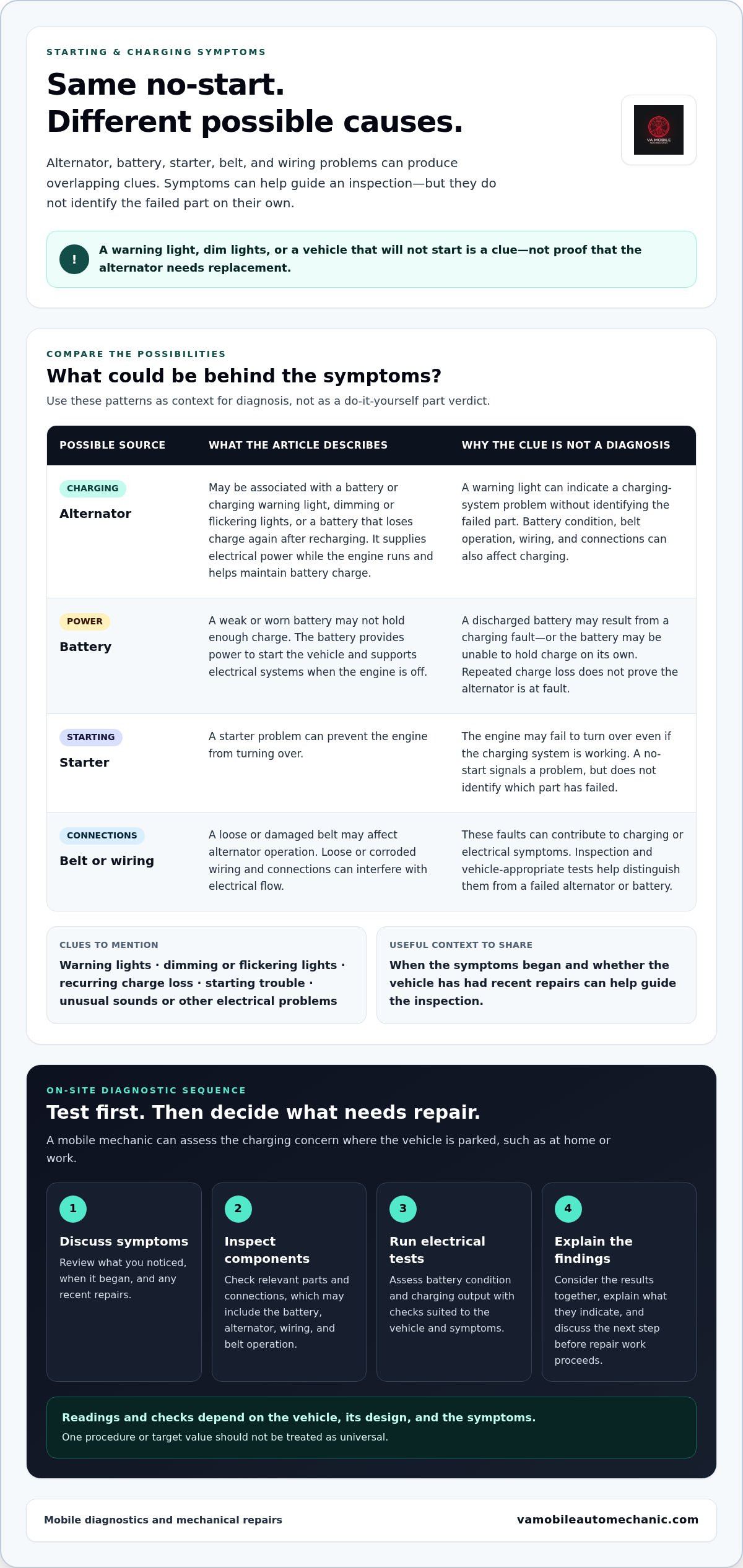
Similar starting symptoms can have different causes. Replacing the alternator without testing may leave the original problem unresolved, especially if the fault is in the battery, starter, belt, wiring, or a connection.
Use these patterns as clues, not proof. Symptoms can overlap, and one sign alone can’t identify the failed part.
| Possible issue | Common clues | Why testing matters |
|---|---|---|
| Alternator or charging system | Battery warning light, dimming or flickering lights, or a battery that loses charge again after the vehicle has been running | A battery can lose charge for reasons other than alternator failure. |
| Battery | Slow or unsuccessful starting, especially after the vehicle has been parked | A weak battery may struggle to start the car even if the alternator is working. |
| Starter | The engine may not turn over when you try to start it; clicking can also occur | A discharged battery or poor connection can create similar symptoms. |
Alternator versus battery symptoms
The battery supplies power to start the vehicle, while the alternator helps maintain its charge as the engine runs. If the battery is weak, the car may struggle to start even with a functioning alternator. If charging is faulty, the battery may lose charge again after a drive.
A jump-start may get the engine running, but it doesn’t confirm which part caused the problem. A dashboard warning light is also a clue, not a verdict. Testing the battery and charging system helps distinguish a battery that can’t hold charge from a fault that prevents it from being charged.
Alternator versus starter symptoms
The starter turns the engine when you turn the key or press the start button. If the engine doesn’t crank, the starter may be involved, but a weak battery, loose connection, or another issue can produce a similar result. Alternator problems more often affect charging while the engine is running, but symptoms aren’t always clear-cut.
Professional testing gives the mechanic a basis for explaining which system appears to be at fault and what repair makes sense. With mobile alternator repair, the diagnosis can happen where the vehicle is parked, helping you make an informed decision before authorizing parts replacement.
What to expect from mobile alternator repair at home or work
Mobile alternator repair starts with a few details about your vehicle and the problem. After you share where it’s parked, a mechanic can assess the charging concern on site. The diagnosis guides what happens next, so an alternator replacement isn’t assumed before the fault is identified.
How to prepare for an on-site alternator service
When requesting service, have the vehicle’s make, model, year, and location ready. Describe what you’ve noticed, such as a warning light, dimming lights, difficulty starting, or a battery that keeps losing charge. Include when the symptoms began and whether they happen consistently or only in certain situations.
Keep the vehicle available for inspection and park it in a safe, accessible area with room to work. Clear access helps the mechanic reach the vehicle and assess it without avoidable obstacles. If the parking area is unsafe or too restricted for inspection or repair, another transport arrangement may be needed.
What happens after the mechanic identifies the fault?
The mechanic reviews the diagnostic findings with you and explains suitable next steps. Depending on the results, the issue may involve the alternator or another part of the charging system. The work required can vary with the diagnosed fault, vehicle design, and access to the component.
If on-site repair is appropriate, the mechanic can carry out the suitable work where the vehicle is parked. Any checks after the repair depend on the vehicle and work performed, so the process may differ from one service visit to another. If the location or condition of the vehicle makes on-site work unsuitable, you may need to arrange another way to move it to a suitable repair location. VA Mobile Auto Mechanic provides on-site diagnostics and mechanical repairs at homes and workplaces across Virginia, Washington, DC, and Maryland.
To arrange an on-site visit, request on-site mobile mechanic service and share your vehicle details, symptoms, and location.
Book mobile alternator repair across Virginia, Washington, DC, and Maryland
If your vehicle has a battery warning light, dimming lights, repeated battery drain, or trouble starting, mobile diagnosis may be a practical next step, especially if you’re unsure whether it’s safe to drive. VA Mobile Auto Mechanic provides on-site diagnostics and mechanical repairs at homes and workplaces across Virginia, Washington, DC, and Maryland.
What details should you share when requesting service?
Share the vehicle’s year, make, and model, along with its current location. Describe any warning lights, electrical changes, or recent starting problems, and mention when they began. Let the mechanic know whether the car is parked at your home or workplace so the visit can be arranged around where it sits.
Clear details help set the context for the on-site assessment. Keep the vehicle accessible and available for inspection, and note whether symptoms happen consistently or under particular conditions.
When is mobile service a practical next step?
Mobile alternator repair can help when charging-system symptoms make a shop trip difficult or you don’t want to drive an unreliable vehicle. A mechanic can assess the problem where the car is parked, then explain the findings and suitable repair steps. The diagnosis matters because a battery, starter, wiring, or connection issue can resemble an alternator fault.
The recommended work depends on what the inspection and testing show, as well as the vehicle and repair required. If the vehicle or parking location isn’t suitable for on-site work, another transport arrangement may be needed. Mobile service does not mean every fault can be repaired at every location, but an on-site assessment can clarify what to do next without first driving the vehicle to a shop.
To request a visit, provide your vehicle details, symptoms, and location through mobile auto mechanic service.
Choose a clear next step for your charging problem
A battery warning light, repeated loss of charge, or trouble starting can point to a charging-system issue, but symptoms alone can’t tell you which part has failed. Testing the battery, alternator, starter, and related connections helps guide the repair instead of relying on a guess. Mobile alternator repair brings diagnosis to your parked vehicle.
VA Mobile Auto Mechanic’s certified mobile mechanics provide on-site diagnostics and repairs at homes and workplaces across Virginia, Washington, DC, and Maryland. Share your vehicle details, location, and symptoms so the mechanic can assess the problem and explain the next steps.
Request mobile mechanic service to take a practical step toward understanding what your vehicle needs. With a clear diagnosis, you can decide how to move forward with confidence.
Frequently Asked Questions
Can a mobile mechanic replace an alternator at my home?
Yes, a mobile mechanic can replace an alternator at your home when the diagnosis confirms it’s needed and the vehicle and work area are suitable. The mechanic first assesses the charging system, then explains the findings and suitable next steps. VA Mobile Auto Mechanic provides on-site diagnostics and repairs at homes and workplaces across Virginia, Washington, DC, and Maryland, so a shop visit may not be needed for a suitable repair.
How can I tell if my alternator or battery is bad?
You can look for clues, but symptoms alone can’t reliably identify the failed part. A weak battery may cause slow starting or no start, while a charging problem may leave the battery losing charge again. A battery warning light or dimming lights can also indicate a charging-system concern, but they don’t prove the alternator is faulty. Testing the battery and charging system helps distinguish between possible causes before parts are replaced.
Can I drive with a bad alternator?
Driving with a suspected alternator problem can be unreliable because the battery may lose charge while the vehicle is running. Electrical systems may stop working properly, and the engine could eventually stall. If you notice dimming lights, a charging warning, or repeated loss of battery charge, avoid relying on the car for a trip and arrange diagnosis. Whether it’s safe to drive depends on the vehicle’s condition and symptoms.
How long does mobile alternator repair take?
There isn’t one fixed time for mobile alternator repair. The visit may involve diagnosis first, and the time needed for any repair depends on the vehicle’s design, access to the alternator, and the fault found. Some charging problems may involve a part other than the alternator, which changes the work required. The mechanic can explain the findings and expected next steps after assessing the vehicle, rather than relying on a general time estimate.
How much does mobile alternator repair cost?
The cost depends on the diagnosed fault, vehicle design, parts required, and work involved. An alternator replacement may differ from a repair involving a battery, wiring, belt, or connection issue, so a useful figure depends on the vehicle and diagnosis. Share the year, make, model, location, and symptoms when requesting service. The mechanic can assess the issue and discuss suitable repair steps before work proceeds.
What happens if my car will not start because of an alternator problem?
A car that won’t start needs diagnosis because a discharged battery, starter fault, poor connection, or charging-system problem can cause similar symptoms. A mobile mechanic can assess the vehicle where it’s parked, including at home or work. Testing helps identify the likely cause and clarify repair options. If the vehicle or location isn’t suitable for on-site work, you may need to arrange another way to move it.
Can an alternator problem be diagnosed in a driveway?
Yes, a mobile mechanic can diagnose an alternator or charging-system concern in a driveway when there’s safe, accessible space to inspect the vehicle. The assessment may consider battery condition, charging output, wiring, connections, and belt operation, with checks suited to the vehicle. A driveway diagnosis helps distinguish an alternator fault from other causes without driving to a shop. VA Mobile Auto Mechanic serves customers across Virginia, Washington, DC, and Maryland.


